Curriculum
Welcome!
The students at Trinity Church Day School learn primarily through play. While our teachers follow an academic curriculum at each age-level that corresponds with Maryland Early Learning Standards, we believe children learn through interaction with their teachers, peers, and learning materials. Any given day at Trinity Church Day School, you will find our Angels using their imaginations, creating beautiful artwork, building with various kinds of blocks, and developing all skills through meaningful and purposeful play.
Curriculum Overview
Reading
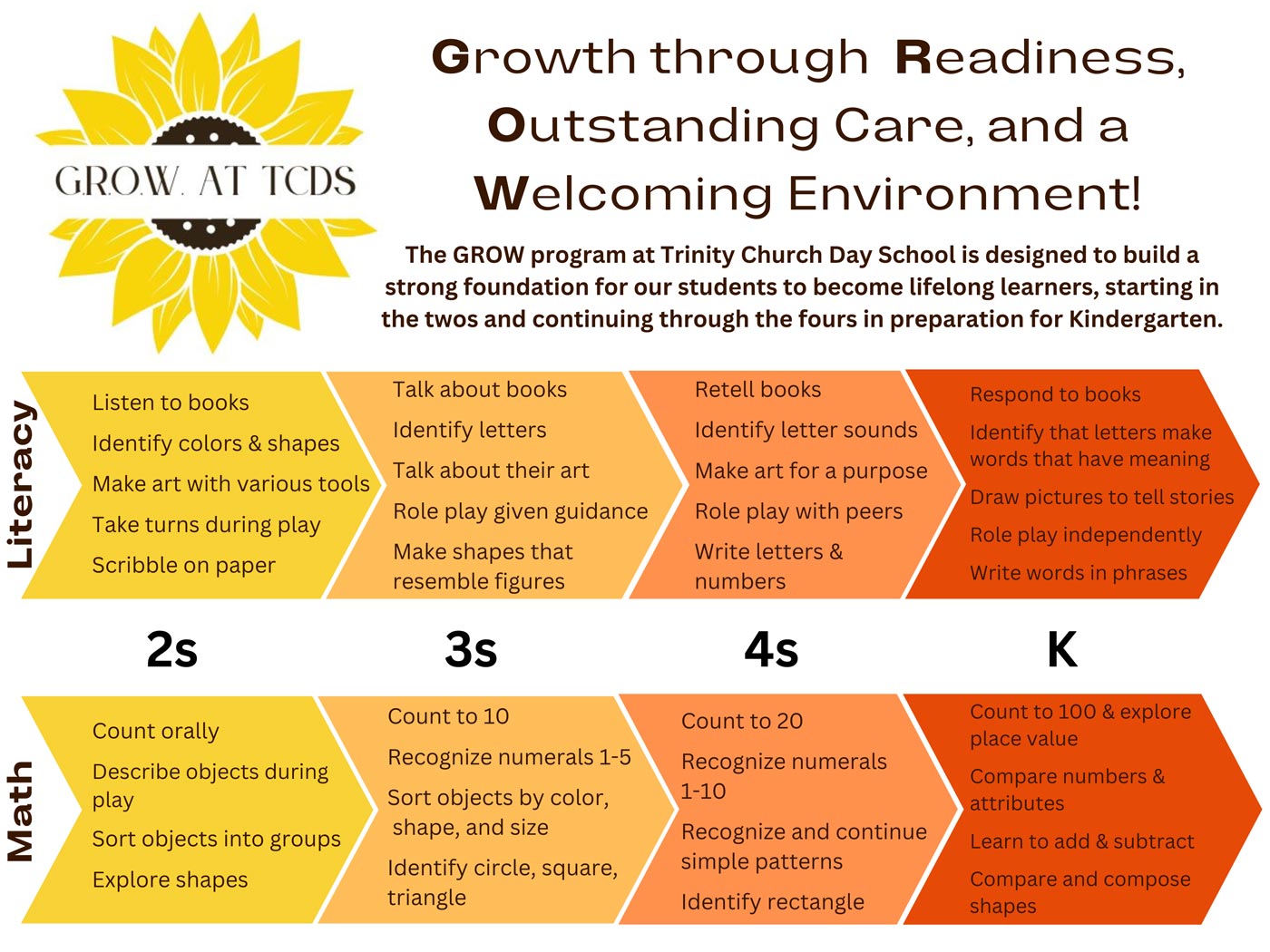
Early recognition of letters and exploring print. Associating letters with sounds, and participating in reading.
Writing
Developing strong fine motor muscles in order to prepare to form letters and words.
Math
Learning shapes, sorting, counting, identifying numerals and continuing patterns, and so much more.
Music
Experiencing and learning music that ties in with the seasons with a little creative movement too.
Fitness Fun
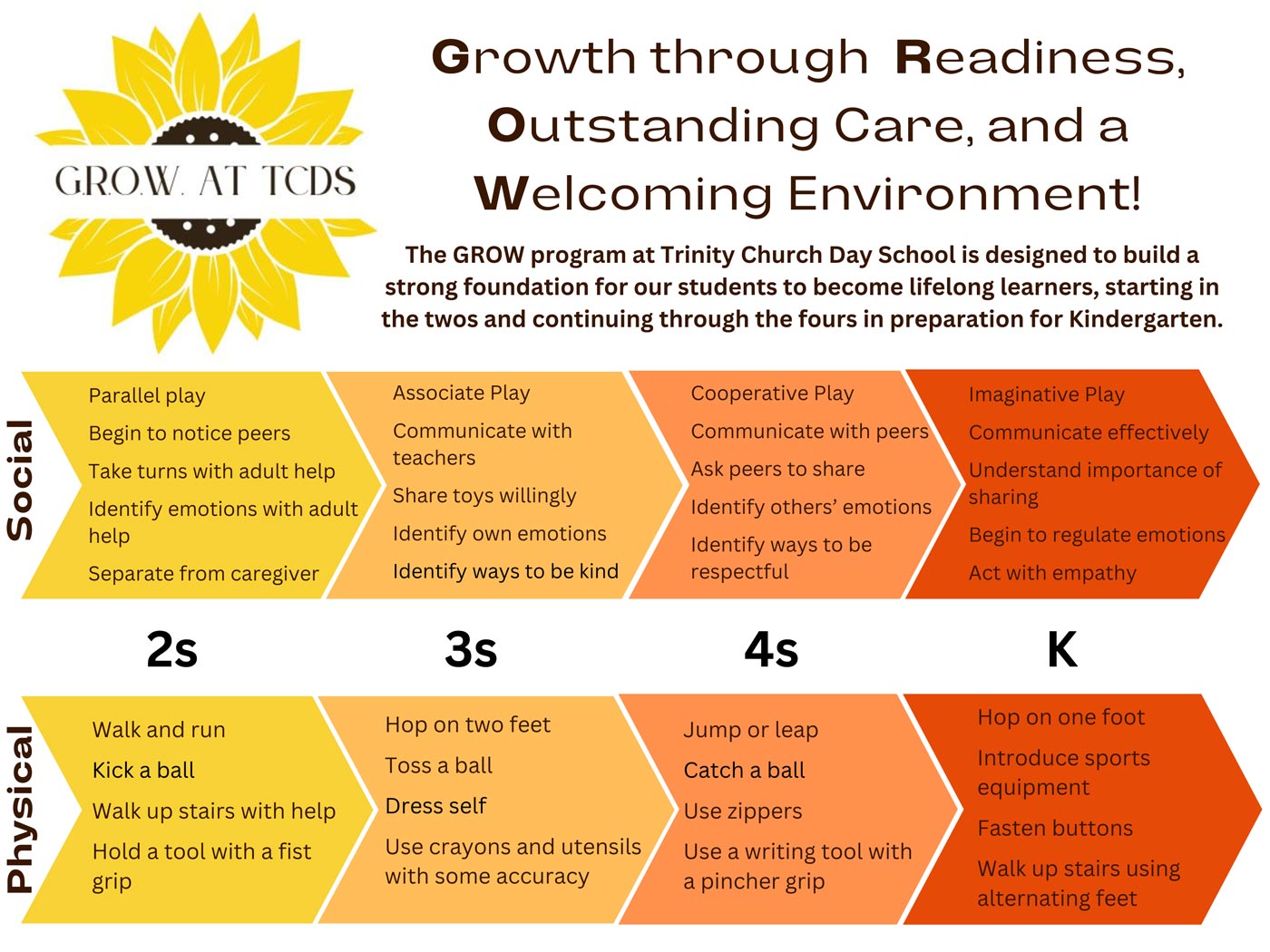
Build coordination and strength to improve gross motor skills and get the heart rate up.
Reading
Our students learn to recognize letters early by looking at their names, exploring print in their home and school environments, and actively participating in read alouds with an adult or older sibling. Then, they learn to associate letters with sounds and practice how to correctly pronounce each letter sound. The last piece to the puzzle is learning to put letters together to make words. All of this is accomplished by reading with children, playing literacy games, and providing a print-rich environment for our students.
What is the best way to help my child learn to read?
Read to him or her, ask questions about the stories and books you read together, and make reading a fun and comfortable activity at home. All the rest will fall into place when your child is ready!
Writing
Learning to write isn’t just about letter recognition and formation. We help our students develop strong fine motor muscles by working with play dough, using scissors and glue sticks, and also drawing and coloring. Once those hand and wrist muscles are strong, our teachers help our students to learn an appropriate finger grip when using crayons, markers, and pencils. When all of the foundations are in place, and the child is ready, students are taught how to form letters and write words.
But my child just scribbles all over the paper. Shouldn’t they be coloring inside the lines?
Children are able to better control their fine motor muscles the older they get and the more they are given the opportunity to strengthen their hands and wrists. Scribbling will help your child to build those muscles, so let them do it. You will see their drawing become more sophisticated soon. Plus, if you ask them about their “scribble”, I bet they can tell you a full story about what is happening in their picture!
Math
Our students learn shapes, sorting, counting in sequence, counting objects using one-to-one correspondence, identifying numerals, identifying and continuing patterns, and so much more. All of these concepts are taught through games, student-led activities, crafts, and play scenarios. Teachers are able to differentiate their activities to meet the individual needs of their students.
Music
Each week, our students are able to experience and learn about music that ties in with the current seasons and holidays! The children also learn traditional chapel songs that they sing in weekly and holiday chapel services.
Fitness Fun
Our students participate in lessons that help them build coordination and strength to improve their gross motor skills. Children participate in activities designed to improve throwing, kicking, balancing, running, jumping, and many more skills all while getting their heart rates up!
Introducing G.R.O.W.